Coronavirus, Zamagni: “Pandemic will change everything”

Work, bureaucracy, education: a pandemic will purge.
Greater importance for non-governmental organizations.
Italy has always managed, soon they will find new roads.

(Translation by Jolanta Micinska – Hercog)
(Italian version at link)
(Polish version at link – by Magda Żymła)

What coronavirus introduces, among other things, is a dramatic change in our lives, from rules to habits.

And it will also affect the mentality and understanding of the state of affairs.
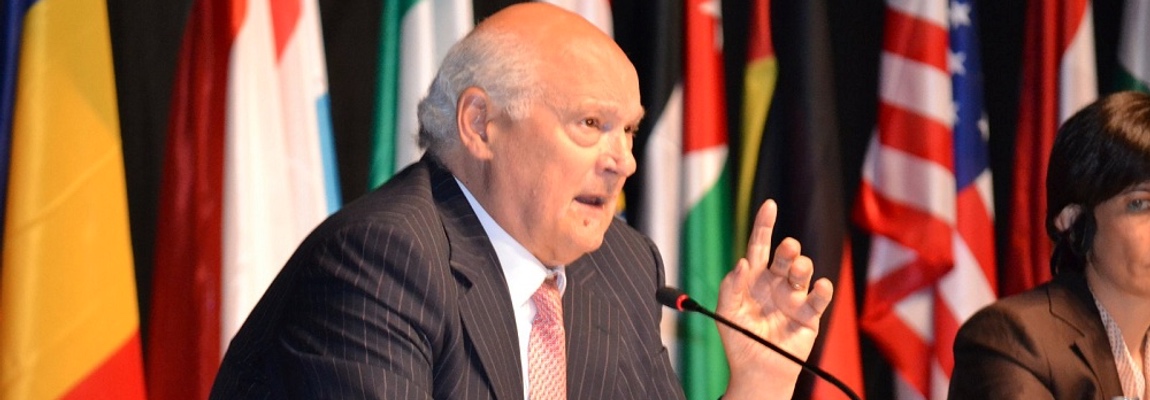
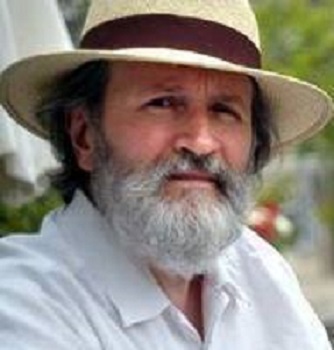
We discussed this with prof. Stefano Zamagni, former president of the Third Sector Agency, professor at Johns Hopkins University, dean of the Faculty of Economics of the University of Bologna, one of the main collaborators of Pope Benedict XVI in editing the text of the encyclical “Caritas in Veritate” (in 2007-2009) and, from 2019 , president of the Pontifical Academy of Social Sciences.


Professor Zamagni, as Wikipedia also reports, you are a global expert in the field of social economy. What is your point of view on the current situation?

“Look, those who know the Italian character, and here the story is clear, know that Italians have a specific feature: they must reach the edge of the abyss; when they get there, they put off all disputes, roll up their sleeves and start again. It has always been like that. This leads me to the conclusion that when this crisis situation is over, there will be a strong revival of our people’s interest in what we call “the common good.”

What do you mean?

“This pandemic shows us that the” total good “orientation has led to the failure we are now observing. We must replace the adjective “total” with the adjective “common”. This means that people, and above all companies, must act in order to stay on the market in conditions of good development and economic and financial balance, but not only: it is a mistake, and here responsibility also lies with professors of economics, it is stated that the goal the company is maximizing profit for shareholders (shareholder value).”

They say so indeed. What, in your opinion, is the company’s purpose?

“Historically, the company was born with the mission of producing value, or rather creating value. This value cannot be transferred to profit without coverage. Profit must be a share, even significant, in value, but not in everything as it has been in the last 25-30 years.
In this respect, many economists change their point of view.”

And how can you define this change?

“There would be many, but I’m going to pay attention to four points in particular.
The first point is what we just said. The second thing is to understand the correct nature of bureaucracy: today everyone is against bureaucracy, nobody even thinks about talking about it well, but it’s a very serious mistake.”

This is curious. Why?

“Because bureaucracy is not a cause but an effect. The reason for bureaucratization is the search for income, and the search for income is a state of mind that affects both the public and private sectors. This is due to the fact that bureaucracy is an instrument that allows (the state or private entrepreneur) to acquire and maintain rent-seeking positions.

Income is the number one enemy of both salary and profit: the higher the pension, the lower the profit and thus the lower the investment rate in innovation. On the other hand, the lower the salary, the lower the actual demand.
This pandemic will sweep away this mentality because it has shown that if a company does not introduce real innovation, it falls out of the market. Let’s look at a banal and direct example: the only companies that managed to work are those that launched the so-called smart working (15-20%); not only because they placed computers in employees’ homes, but because they changed the organization of work. Until now, again because of the search for profit, companies and organizations do not want to change the way of production, sticking to the outdated model of Taylorism and at the same time losing its resilience.
If we introduce this concept into public administration, we will understand why all political parties, from left to right, want to keep bureaucracy. They all promise to limit it, never doing it: bureaucracy serves politicians to maintain their power.
Enterprises – clearly and fortunately there are praiseworthy exceptions – do not criticize this strongly and firmly, because they themselves fall victim to bureaucracy, and are therefore afraid that by acting against public bureaucracy, it will eventually turn against them.”

So, if I properly follow your reasoning, when we have explained the need to focus on the common good rather than the total good, then we need to work out the causes that generate bureaucracy. Third thing, what would it be?

“The third thing is education.
The structure of the university education sector should be completely changed. The current structure is still the structure of the Gothic reform of twenty years of fascism: a Taylorist type structure where the teacher acts as a workshop manager who checks if students learn their lessons and where the institution functions as a courtroom where young people are assessed and sanctioned (including sense that if the sentence is negative, they fail.

The question is: why, for over seventy years, all political forces have not had the courage to change the fascist system in such an important issue as education? Why was it limited to approving reforms, not transformation?
It is obvious that we must wait for the citizens to organize and speak up if we really want school to become a place of education, not just studying.
Take the case of the reform known as Alternanza Scuola – Lavoro (“school-work alternation”): the one who invented it, I hope, had good intentions, but made a huge mistake! There can be no question of alternation between school and work, but rather of school-work coherence.”

The third point is inherent in education reform, which also applies to what was said at the beginning. And the fourth point?

“Finally, we are dealing with a scandal due to the fact that during this crisis period the third sector was kept out of the way: we have the best third sector in the world among volunteers, social cooperatives, social enterprises, NGOs, foundations and was not involved in the decision-making process .
The social dimension is not guaranteed by the state, hospitals, police or carabinieri, but by the third sector.”

How do you see the situation developing?

“Now that the events have reached the inevitable turning point, you will see that when this crisis ends, it will cause a domino effect.
People have already understood what we have talked about before is just a matter of waiting for some collective entity to start the process. It won’t be long, a few months, by the end of the year at the latest.
And it will not be a matter of finding a leader, they will appear later. Rather, it is a matter of raising awareness of organized civil society.
Once the critical mass is reached, the process of rebuilding the country can begin.
Please go to the website of the “Politica Insieme” association and you will have an idea about the current state of affairs.”
Coronavirus, Becchi: “Even God Will Not Save Us”

In the name of security, freedom was taken from us. We are trying to stop the virus that has already won: politics, church and constitution have disappeared and with them ages of civilization.

(Translation by Jolanta Micinska – Hercog)
(Italian version at link)
(Polish version at link)

The times we live in are very uncertain. Uncertainty reigns in many ways. The virus is not fully known, from those who identify it with the flu to those who treat it as the worst disease. Therefore, it is not known how to behave: whether to block everything or live a normal life. One thing is certain, however: this sudden change changes.

We talked about this with Professor Paolo Becchi, a former researcher at the University of Saarland in Germany, a scholarship holder of Deutscher Akademischer Austauschdienst (DAAD), then Alexandre von Humboldt-Stiftung, lecturer at the Swiss University of Lucerne and currently a professor of philosophy of law at the University of Genoa.

Our habits are challenges to freedom, which we took for granted.

Professor, what are your thoughts on the current situation?

“The world that appears in my last book „Democracy in Quarantine” written with the participation of Giuseppe Palma, which will be published for the Jubilee next week, presents my point of view, refers to the novel” Blindness “by Saramango. This is a story of a sudden epidemic where everyone has lost his sight. And, in a similar way, we have also become like that because of the virus that has infected our democracy, freedom, conscience and lifestyle. I think there is no point in saying “sooner or later we will beat him” because it has already won. However, it bothers me why I can’t find the answer to how it is possible that the Italian government resigned so quickly from the constitutional provisions on freedom, which was previously considered sacred in the name of “survival”. See, in the name of security, freedom has been taken from us. This is the fact.”

When thinking about a pandemic, the government sometimes has to make difficult decisions to guarantee the protection of human life, don’t you think?

“I understand everything, but there are different ways. It is enough to compare our neighbors. I do not mean Sweden, where the philosophy of action is completely different, let’s look at Germany, where clear laws and sanctions have been established, without restricting movement. What is only an exception with us is a norm for Germans. In South Korea, a smart tracking system was used that does not take away the freedom of 60 million from the public, unlike that used in Italy. A similar system was applied by Zaia in Veneto, which gave very good results. It is also worrying that there is censorship in Italy. The task force has the task of eliminating information which the authorities consider unreliable. “
In your opinion, therefore, is the fault on the political side?
“Of course, and more.
There is a lack of democracy. The state operates on the decrees of the Prime Minister as administrative acts that do not pass the parliamentary vote or the president’s approval. There are also no State-Regions relationship. In Germany, Angela Merkel successively organized meetings with representatives of the Länder, where decisions were made regarding individual regions, always taking into account the balance between freedom and security. In our state, the fault lies also with the opposition, which paradoxically rejected the ball on the opposite side, to the detriment of the citizens. In addition, serious decisions are made on the basis of technical and scientific opinions of “experts” who do not have an unanimous opinion. These scientists decide about our lives, they do not know the answer to the question whether the virus is a form of life or not. We have moved from the state of the right to a therapeutic state. Public opinion and the church are also a problem. “

In what sense?

“There is no information abroad about what the situation really looks like in Italy, because you usually read newspapers such as” La repubblica “and” Corriere della sera “who operate on a task force basis, as I mentioned above. We are forced to quarantine, during which most people watch TV all day, which it broadcasts, which strengthens the right decision on restrictions by the Italian government and that’s what quarantine is for. The situation is typical for an authoritarian regime that creates a climate of fear.”

Speaking of Church responsibility, what do you mean?

“People die without contact with loved ones, alone, without a chance to say goodbye, not to mention the funeral, where they are celebrated in Germany all the time. We have deceased treated as toxic waste. The church has always been sensitive to the sick and suffering, and is silent today. St. Francis hugged lepers, and Pope Francis did not even have the courage to meet what was going on, fighting to preserve the anointing of the sick and a dignified burial. The church has always been present throughout all epidemics. “
What are your predictions for the future?
“We participate in a great social experiment that aims to verify how far you can go to bring the whole country down. This experiment will succeed. It is a country where I did not expect to give up fundamental human freedoms, a Catholic country that would give up the worship of the dead, an anti-fascist country that gave up constitution-based democracy. A state without immunity. The limit has been exceeded, unlike Heidegger, I think that even God cannot save us.”

Trump minaccia l’Oms ed accusa la Cina

Il presidente Usa si è scagliato contro l’Oms criticandone l’operatore. Poi le accuse sono volate verso la Cina per la gestione del Covid19.

È un fiume in piena, Donald Trump.

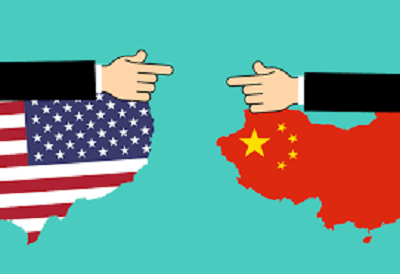
Il presidente degli Usa, dopo aver già dichiarato di avere le prove secondo le quali il coronavirus è stato creato in laboratorio, concetto poi ribadito dal Segretario di Stato Mike Pompeo, ora si scaglia contro l’Oms (Organizzazione mondiale della sanità) accusandola di essere troppo dipendente dalla Cina.

Più precisamente, stando a quanto riporta “Reuters”, Trump avrebbe giudicato l’operato dell’Oms come “un’allarmante mancanza di indipendenza” (sottintendendo dalla Cina).

A questo ha fatto seguito la minaccia del presidente a stelle e strisce di interrompere i finanziamenti all’organizzazione, se questa non si impegnerà ad apportare miglioramenti entro un mese.

Lo stesso Trump, poi, non le ha mandate a dire nemmeno nei confronti della Cina, incolpandola di una cattiva gestione in merito all’emergenza di coronavirus

A queste accuse ha risposto il portavoce del ministero degli Esteri cinesi Zhao Lijian, sostenendo che Washington sta cercando di infangare la reputazione della Cina, ma che commette un errore provando ad incolparla per sfuggire alle proprie responsabilità.

La Cina, ad ogni modo, sta cercando di mantenere pacifici i rapporti anche dal punto di vista commerciale: da oggi altri 79 prodotti americani verranno esonerati dai dazi (approfondimento al link).

Si tratta di tessuti e prodotti chimici, anche se il sito del ministero delle Finanze cinese non precisa però quanto pesino questi prodotti nell’economia di Pechino.

Francia e Germania: Recovery fund da 500 miliardi

Accordo sull’asse franco-tedesco per attivare uno strumento anti-crisi a livello europeo.
Ancora una volta, però, le regole le fanno loro mettendo bene in chiaro chi comanda in Europa.

Un Recovery fund da 500 miliardi di euro.

Questo è l’accordo trovato da Francia e Germania al fine di trovare strumenti in grado di dare un aiuto contro la crisi da Covid19, ovvero “la più grave crisi della storia dell’ue”, come l’ha definita Angela Merkel.

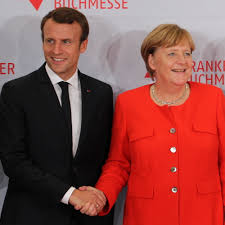
Proprio la cancelliera tedesca ha concordato con Emmanuel Macron di arricchire il bilancio europeo pluriennale con i sopracitati 500 miliardi di euro.

Gli aiuti verranno dati ai Paesi più in crisi sotto forma di trasferimenti, non di prestiti, e la loro raccolta verrà effettuata dalla Commissione Ue sul mercato tramite dei bond.

I medesimi trasferimenti, come precisato dal premier francese, non verranno direttamente restituiti dagli Stati che li riceveranno, ma dai Paesi membri nel complesso. Gli ha fatto eco la Merkel, tenendo a sottolineare che la Germania si farà carico della parte più sostanziosa del contributo (27%).

L’importo del fondo è stato ridotto rispetto alle richieste iniziali di Paesi come l’Italia, che pare riceverà circa 100 miliardi, ma la cosa era necessaria per ottenere il nullaosta da parte dei Paesi più ostili a manovre di questo genere come Olanda ed Austria. Ancora una volta, anche se la proposta dovrà essere accettata all’unanimità in Parlamento europeo per poi essere ratificata dai vari Parlamenti nazionali, è tuttavia palese chi comandi in Europa, decidendo tempistiche, portata e modalità di ogni manovra.

Cina: altri 79 prodotti Usa esonerati dai dazi

Dopo le apparecchiature mediche a febbraio, ecco una nuova lista contenente tessuti e prodotti chimici.
Pechino prova a mostrare le sue buone intenzioni verso l’accordo commerciale con Washington, ma i numeri in gioco restano un po’ oscuri

Altro aggiornamento inerente alla guerra commerciale tra Cina ed Usa: il governo cinese ha deciso di togliere dalla lista dei dazi più elevati altri 79 prodotti provenienti dagli Stati Uniti.

Tra questi prodotti, che vedranno riduzioni di tassazione a partire dal 19 maggio e per la durata di un anno, figurano articoli chimici e tessuti.

Questo è quanto emerge dal sito del ministero delle Finanze cinese, che però non precisa quanto pesino questi prodotti nell’economia di Pechino.

Di conseguenza, non sarà facile capire quale sia l’impatto preciso per l’import cinese, ma sarà tuttavia possibile tenerli monitorati tracciandone l’andamento rispetto al passato.

L’altra strada per valutare il peso della lista messa in campo dai cinesi, è quella di vedere quanti dei prodotti presi in considerazione venivano venduti dagli americani alla Cina.

L’accordo, comunque, sembra lasciar intendere la volontà della Cina a mantenere fede all’accordo commerciale stipulato ad inizio anno con Washington; questa lista di prodotti a cui verranno ribassati i dazi fa infatti seguito alle due già pubblicate a febbraio e che comprendevano attrezzature mediche delle quali Pechino necessitava al fine di affrontare l’emergenza derivante dal coronavirus.