Era capitato solo una volta in Europa.
Il mercato non sembra comunque risentirne per il momento.
La richiesta di processo davanti al Tribunale di Stato per il presidente della banca centrale è una rarità, è successo solo una volta in Europa, dopo gravi accuse penali.
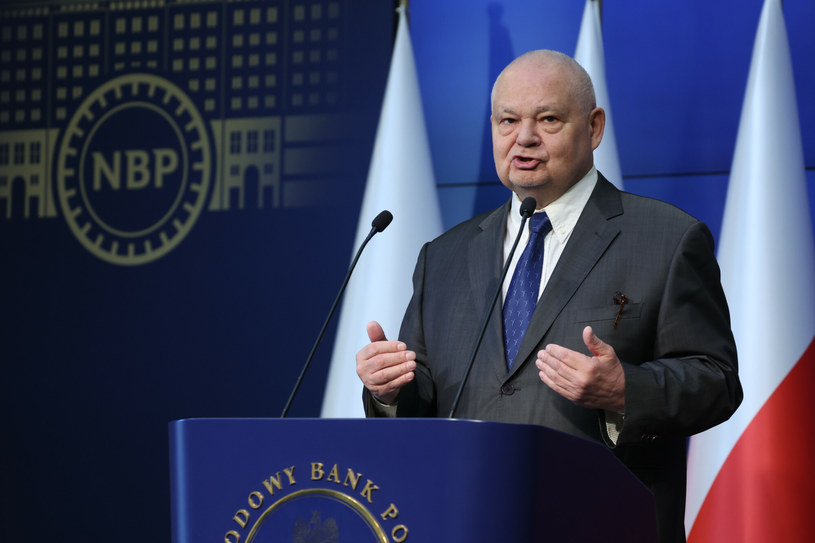
Eppure in Polonia, come riporta Polonia Oggi, i deputati della maggioranza al potere hanno presentato la richiesta di chiamare il presidente della Banca Nazionale Polacca, Adam Glapiński, a rispondere davanti al Tribunale di Stato, il che potrebbe richiedere da 6 a 12 mesi.
La richiesta di procedimento davanti ad un Tribunale di Stato per il presidente della NBP (Banca Nazionale Polacca) potrebbe influenzare i rendimenti dei titoli di Stato e il comportamento dello złoty, ma il mercato non prevede cambiamenti nella politica monetaria.
I rendimenti dei titoli di Stato polacchi hanno registrato un lieve calo, mentre lo złoty si è leggermente indebolito rispetto all’euro, ma si è rafforzato rispetto al dollaro.
In Borsa le azioni sono aumentate, il WIG20 ha guadagnato il 2,2%, che potrebbe essere il risultato delle note positive riguardanti Cyfrowy Polsat, LPP e mBank.
Risultato netto di circa 30 milioni per la Banca del Vaticano.
Patrimonio superiore ai 2,8 miliardi.
Lo Ior stacca un “dividendo” di 3 milioni a Papa Francesco.
L’Istituto per le Opere di Religione (appunto, Ior) ha deciso di destinare circa un decimo degli utili registrati l’anno scorso agli atti di carità del Pontefice.
Il 2022 è stato del resto proficuo per la banca del Vaticano che ha aumentato del 64% i profitti rispetto al 2021, sfiorando i 30 milioni di risultato netto.
Merito soprattutto dell’attività di gestione del risparmio che ha fruttato commissioni per 18,1 milioni su un patrimonio di oltre2,8 miliardi.
Come riporta Il Corriere della Sera, lo Ior ha lanciato negli anni 16 fondi che investono su azioni, valute e obbligazioni di Statie imprese che rispettano i principi della dottrina Sociale della Chiesa.
La divisione di asset management è senz’altro la più redditizia per lo Ior che non svolge invece la più tipica delle attività bancarie: il credito.
La concessione di prestiti è circoscritta alle anticipazioni di stipendi e pensioni ai propri clienti, ossia a finanziamenti a rischio pressoché zero, accordati a tassi contenuti e in numero limitato.
La maggior parte degli impieghi dell’istituto consiste invece nel deposito di somme presso altre banche e nell’acquisto di bond sovrani e societari.
Questi investimenti hanno fruttato allo Ior un rendimento dello 0,91%, mentre la remunerazione accordata agli 1,8 miliardi depositati dalla clientela si è fermata allo 0,10%.
Su questa differenza la banca ha costruito un margine di interesse di 22,6 milioni, in crescita del 3,7% rispetto al 2021.
Finanziamenti già sospesi.
Sospensione dei servizi nelle prossime settimane.
Anche Credit Agricole si unisce alle altre società e sospende i propri servizi in Russia.
L’istituto di credito che, come riporta “Tgcom24“, in precedenza aveva sospeso i nuovi finanziamenti alle società russe, ha detto in un comunicato di aver contattato clienti aziendali internazionali per iniziare a sospendere i servizi, con effetto nelle prossime settimane.
Mustier lascierà il gruppo dopo la presentazione dei risultati.
Orcel nuovo AD.
Jean Pierre Mustier aveva annunciato l’addio al gruppo Unicredit ancora a novembre; e questo avverrà dopo la presentazione dei risultati del 2020 prevista per giovedì (approfondimento al link).
Il suo sostituto, dopo i vari nomi fatti, parrebbe essere Andrea Orcel, ex capo dell’investment banking di Ubs.
A riportarlo è “Reuters” che cita fonti vicinissime alla situazione, le quali sembrano andare sempre più nella direzione indicata poco tempo fa (approfondimento al link).
La nomina di Orcel, comunque, dovrebbe essere ufficializzata verso metà aprile, in occasione dell’assemblea sul rinnovo dell’intero board. Nel frattempo, dunque, serve un traghettatore.
La figura che pare sia stata indicata a ricoprire questo ruolo è Ranieri de Marchis, attuale Co-chief operating officer del gruppo.
The elimination of cash, so much wanted by the government and liberal political forces, has been hampered, among others, by the EU.
Improvements portrayed as a vaccine for tax evasion often carry insidious risks to society.
(Translation by Jolanta Micinska-Hercog) (Polish version at link – translation by Aneta Chruscik) (Italian version at link)
The government is pushing for the elimination of cash, which is also the direction of the decrees issued, setting maximum thresholds.
Cash payments first at € 3,000, then € 2,000 and finally € 1,000 over a period of several years.
The main reason, or at least the announced one, is to eliminate tax fraud. However, in a letter dated 16 December last year, the EU asks the Italian government to be cautious, pointing out that the elimination of cash has already had negative effects in Spain and Greece. In addition, among the seven points presented in the list, he emphasizes that in order to eliminate cash, capital should be guaranteed for the implementation of a new alternative payment, explaining: if you want to eliminate cash, you should pay attention that the costs of implementing a new form of payment (be it commissions or purchasing electronic devices) do not fall on citizens. ).
Finally, the EU also raises another point: Cash has a good effect on the correct management of money, helping you to understand it correctly and consequently helping to control your spending.
Alessandro Montanari, a Eurosceptic journalist and TV author (his programs “Lultimaparola” (Rai2), “La Gabbia” (La7), now on Rete 4 in “Stasera Italia“, also commented on this subject), author of the book, sparked a storm of comments on “Euroinomani” by Uno Editori.
SZKOŁA JĘZYKOWA OMEGA – JOLANTA MICINSKA-HERCOG
General Magazine wanted to come back to the subject and it was from Montanari that it faced the discussions it first signaled.
Montanari, do you agree with the theory that eliminating cash will solve the problem of tax fraud?
“I would say it will be limited. The fact that without cash there will be no frauds has not been confirmed anywhere.And then it would only protect us from the evasion of small ones but not from the avoidance of large capital, which is what generates shortages in the coffers of the States.“
You were one of the first, if not the first, to point out critical points in eliminating cash: can you tell us about it?
“Let’s ignore the pros and cons that we all already know, let’s also abandon the possibility of a blackout (which, admittedly, we should bear in mind, knowing that it would throw us into chaos), let us also leave aside the cost issue, on which the EU has already intervened, as you have already mentioned . Let’s start with such considerations: cash and cards are means of payment, but one is valuable in itself, while the other is only a means of payment, which in fact – look at credit cards – are not able to estimate from the savings account the necessary value for the purchase chosen by us the goods.”
What are you going to do?
“Think about what it means to dematerialize money? What impact would this have on our habits and our way of life, and even more so on the lifestyle of future generations, those who, as children and young people, have not dealt with cash as we do with cash. We rarely think about it, but cash? it leads almost automatically to savings and responsible consumption. For example, when you pay with cash, you only buy goods when you have enough money to buy it and if you have it at the moment. Everyone from my generation, from childhood, was taught to save money through a very simple visual tactile experiment, which is very material and understandable to everyone. The grandparents who gave us money also gave us a piggy bank. If someone gave you a gift, you put your money there. You collected them there, as adults taught us to do, so that you could buy yourself the toy you dreamed of. In this way you saved, week after week, little sacrifices after small sacrifices, in order to be able to go triumphantly and excitedly to the shop and buy the much desired bicycle, thus acquiring your first and instructive experience of responsible consumption. I would like to add that this exhausting expectation had one more value: it taught us to want and choose desires, rejecting the redundant, unnecessary and beyond our reach.”
And all this is lost through electronic payments?
“If we are talking about pedagogy, about children who will become young people and then adults, I think so: they will be lost forever.
For the next generations, abolishing cash, we will not be able to give coins or banknotes to put in the piggy bank. It will also be impossible to explain that a coin equals ice on a stick, a banknote is an ice cream dessert, while a few such notes can magically turn into a bicycle. We will have to wait until they grow up to give young people a card, which, unfortunately, will be both debit and credit cards (you will see for yourself whether it will not be…). For him, this card will have no accumulated value over time, but will be the key to direct and unlimited consumption. Children will no longer have to thirst, make austerities and save. Perhaps they will only question their own desires, select and reject, they will be able to buy whatever they want when they want something by pressing one button while sitting on the couch. You won’t even need to transfer the full value to make a purchase. The credit card works on the principle that you buy when you want something, and give the money later. I will improve, you will “find” money later. I say “you will find” because this system seems to be designed to get us into debt. People in debt may say “no” fewer times than those who have savings. It can be foreseen, for example, that in order to compensate for their effort and ingenuity, they are forced to accept unworthy, if not downright humiliating, remuneration. In other words, the more you get into debt, the more blackmail-prone and docile you will be. It is inevitable. Is this the reason the system enjoys eliminating cash so much?”